
EWEB Commissioners take significant step in planning for Willamette Water Treatment Plant
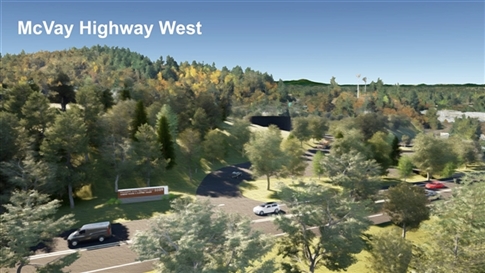
EWEB is moving forward with a water treatment plant on the Willamette River after the utility’s elected Board of Commissioners weighed several alternatives during the Board’s regularly scheduled meeting Tuesday.
A major driver of the project is a need to establish a second treatment plant with sufficient capacity to take EWEB’s sole existing water treatment plant offline for critical inspections and repairs. That plant, the Hayden Bridge Water Filtration Plant, has been in continuous service for 76 years and requires downtime for maintenance.
Commissioners considered several treatment plants with varying capacities and an ultimate buildout goal of 30 million gallons a day (MGD), which represents a comfortable capacity to take Hayden Bridge offline for required maintenance and repairs. Commissioners provided preliminary direction to pursue building a 30 MGD plant now as it offers the lowest cost per gallon of treatment. They also acknowledged tradeoffs, including impacts to customer rates and a need to secure additional water rights to fully utilize the plant’s capacity.
The 30 MGD plant reflects a forward-looking approach to meeting the community’s long-term water needs. Commissioners cited the value of building to a greater capacity in a single construction effort, avoiding the higher cost of expanding to the required capacity later.
EWEB forecasts that the 30 MGD plant will cost $392 million, with the cost spread out over several years. The Willamette Treatment Plant is the single largest EWEB water construction project since the Hayden Bridge Water Filtration Plant was built in 1950.
EWEB relies solely on Hayden Bridge, which draws water from the McKenzie River, to provide water to 200,000 people in the Eugene area. This single point of failure puts Eugene residents at risk of experiencing an extended water outage. Eugene is one of the largest cities in the Pacific Northwest that relies on just one source of water.
The risks of remaining a single source have been growing increasingly visible in recent years.
During the 2020 Labor Day fires, EWEB came dangerously close to needing to evacuate Hayden Bridge, which can’t be operated remotely for extended durations. As summers grow hotter and drier, such wildfires are projected to grow more severe.
And during the 2024 ice storm, extreme weather knocked out three separate power feeds to Hayden Bridge, which relied on backup diesel generators for the first time in the plant’s history to continue producing clean water for the community.
Meanwhile, truck crashes and tanker spills routinely send diesel and other contaminants into the McKenzie River. In May, a tanker truck spilled diesel and milk into a tributary of the McKenzie River.
Finally, a Cascadia Subduction Zone earthquake is expected to render EWEB’s sole water treatment plant inoperable. Such an earthquake would likely rupture water distribution pipes across the city, as well, and EWEB would be unable to begin repairs until it could push water from a treatment plant through the pipes to pressurize the system and detect leaks.
EWEB estimates that a city-wide water outage would cost the local economy tens of millions of dollars per day.
“Only a second water treatment plant of sufficient capacity on a different river built to withstand a major earthquake would mitigate all those risks,” said EWEB’s Chief Water Operations Officer Karen Kelley. “A 30 MGD plant would represent a significant, forward-thinking investment in the future resiliency of our community, and we look forward to developing the detailed financial information the Board needs to move forward on this project.”
Years of work and analysis led to a 30 MGD plant.
EWEB holds a claim to 19.4 MGD of water from the Willamette River — a claim that stretches back to 1886. Such water rights are among the most valuable commodities in the world. In 2011, EWEB secured a permit to put those water rights to beneficial use by 2033. The claim and the permit together provide EWEB with a high level of certainty for a second water source on the Willamette River.
The permit’s expiration in 2033 creates a sense of urgency for EWEB to build the new treatment plant to secure these priceless water rights.
EWEB originally planned to move forward with a plant design completed in 2017, with an estimated cost of $160 million. However, after reevaluating the design in the context of current risks, EWEB found the plant lacked sufficient capacity to take Hayden Bridge offline for required maintenance, which will be an operational necessity by 2040.
EWEB, with leading water consulting firms, analyzed several modern alternatives. EWEB Commissioners opted to pursue the 30 MGD option as it offers the lowest cost per gallon of treatment. A 30 MGD plant will fully utilize EWEB’s existing water rights, though EWEB will need to procure additional water rights to use the plant at its full capacity. The plant will enable EWEB to comfortably shut down Hayden Bridge for repairs while still providing sufficient capacity for indoor residential and commercial and industrial use.
The Oregon Department of Environmental Quality scores the Willamette River as “Excellent” on the Oregon Water Quality Index less than a mile downstream of the proposed intake. The addition of water from the new plant into the existing EWEB system is expected to be imperceptible even to the most discerning water users like medical facilities, dialysis centers, and breweries because raw water from the Willamette and McKenzie are similar in composition and will be treated to achieve similar characteristics.
Importantly, EWEB is not projecting a significant increase in Eugene’s water demand. The plant is needed to cover production at Hayden Bridge from the fall through the spring so Hayden Bridge can come offline for inspections and repairs. Balancing withdrawals across two rivers is expected to benefit both watersheds overall.
“Delaying investment is no longer tenable,” Kelley said. “With each year that passes, the costs rise further, especially with inflation still as high as it is. The time to act and move forward with a second treatment plant is now.”
EWEB will examine financing options.
With preliminary direction on the plant capacity and design specifications established, EWEB will now develop more detailed cost and rate impact information. EWEB is sensitive to the economic pressures felt by the community and is committed to evaluating all tools possible to spread out rate impacts to the extent possible. EWEB is also revising our customer care program which provides bill assistance to low-income customers.
EWEB will evaluate several possibilities for paying for the plant, considering bonds, federal programs, grants and other funding opportunities. In August, the Board of Commissioners will review a long-term financial plan that includes preliminary projections of how the project would affect customer rates over time and will make a subsequent decision on how to proceed based on that information. EWEB water rates are currently among the lowest in the region.
“This is a significant investment, and we know it will have an impact on customer rates. EWEB is committed to financial stewardship and to turning over every stone to find alternative financing options and cost savings,” said Kelley. “Our goal is to fund this essential investment as responsibly as possible, so we can keep delivering the safe, reliable water our community depends on.”