
UPDATE: EWEB Closes Out Spill Response
UPDATE: 5/20/2026
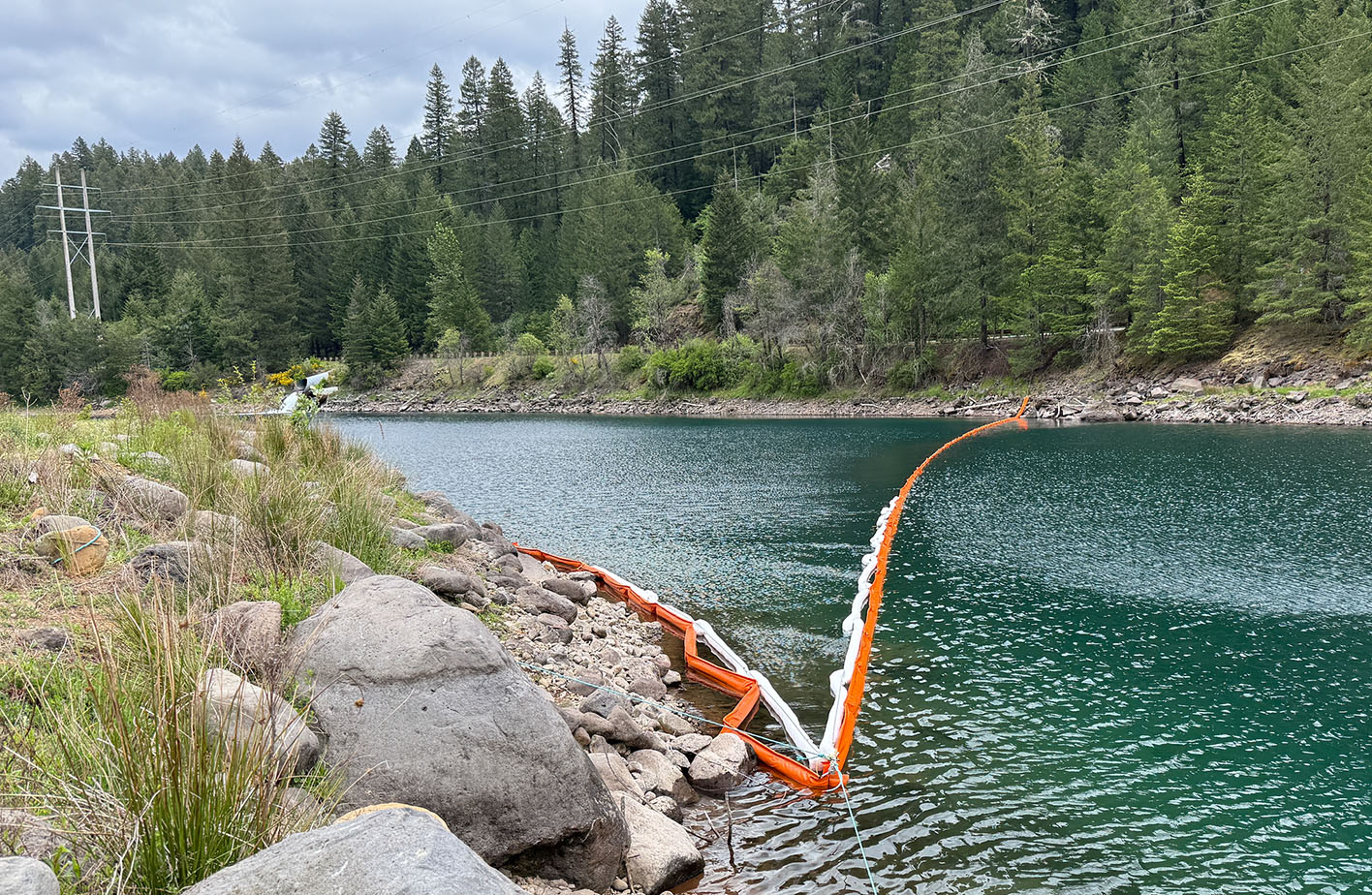
On Tuesday May 19, EWEB staff withdrew the solid containment and absorbent boom from Trailbridge Reservoir, closing out EWEB’s response to the diesel/milk spill as State authorities continue cleanup efforts.
EWEB staff did not observe an oil sheen on the water or collecting on the absorbent boom on Trailbridge Reservoir.
The Oregon Department of Environmental Quality (ODEQ) and Oregon Department of Transportation (ODOT) will continue cleanup efforts, working with hazardous materials contractors to remove as much diesel as possible. The majority of the remaining impacts appear to be localized to Bobby Creek where the truck crashed, and Payne Creek, which Bobby Creek flows into.
EWEB staff stand by their initial assessment that the spill will have no adverse impacts to drinking water quality at this time – thanks to the rapid response of local emergency responders responding to the McKenzie Watershed Emergency Response System (MWERS) notification about the spill, the cold-water conditions limiting biological activity, and due to the spill location.
EWEB will monitor the situation and collaborate with cleanup partners as needed.
EWEB developed the McKenzie Watershed Emergency Response System (MWERS) decades ago as an early response to hazardous material spills. MWERS includes a notification system that alerts local responders to the location of a spill and includes pre-developed ‘strategies’ for boom deployment at specific sections of the river to collect contaminants or divert flow from critical resources. EWEB coordinates an annual drill to test the notification system and practice deployment of containment equipment with local responders, who may be the first people on the scene before regional hazardous material cleanup resources are able to dispatch.
“This incident reinforces the importance of building relationships, and planning ahead when it comes to responding to emergencies,” said Susan Fricke, EWEB Water Resources and Quality Assurance Supervisor. “The McKenzie Watershed Emergency Response System worked as it was designed to thanks to EWEB and partners’ foresight and dedication to practice – we even ran our spill drill last October in the exact site where we deployed this week.”
Milk is considered a hazardous material when spilled into waterways in large amounts. Spilled milk provides a significant increase in organic matter for bacteria to consume. In breaking down the milk, the bacteria also consumes oxygen and can create hypoxic dead zones in the water by using up dissolved oxygen faster than it is replaced. Aquatic life can suffocate if left without enough dissolved oxygen.
In multiple visits to monitor the impacts of the spill, EWEB staff has not observed any fish or wildlife mortalities.
Payne Creek joins the McKenzie River a few hundred yards upstream of EWEB’s Carmen Powerhouse, Trailbridge Campground, and Trailbridge Reservoir.
If any diesel escapes past the ongoing cleanup efforts in Bobby and Payne creeks, the Trailbridge Dam’s permanent solid containment boom that blocks debris from the spillway would also form a barrier to floating diesel. The dam itself would also act as a containment barrier, as the spillway pulls water from below the surface.
EWEB would like to thank all of those who helped respond to the spill as well as efforts for continued monitoring and clean-up:
Upper Mckenzie Rural Fire Protection District, Springfield Utility Board, Oregon DEQ, ODEQ Region 2 HazMat, Oregon Department of Fish and Wildlife, Oregon Department of Transportation, Oregon State Police.