
Related News
Related News
-
EWEB Finalizes Transfer of McKenzie Valley Electric Customers to Lane Electric
EWEB has officially completed the transfer of electric customers in the McKenzie Valley to Lane Electric Cooperative, effective May 1, 2026. This milestone marks the culmination of nearly a year of research, analysis, community engagement, and coordinated efforts between the two utilities.
Find Out More -
EWEB, watershed partners begin South Fork Phase 3 Floodplain Project
Multi-agency effort will restore habitat, improve water quality, strengthen river resilience
Find Out More -
2025 State of the McKenzie Watershed Report
EWEB assures the McKenzie River is an excellent source for Eugene’s drinking water – even as the watershed continues to recover from the 2020 Holiday Farm Fire.
Find Out More -
Sustainability Snapshot - Celebrating Energy Efficiency Projects in the Community
Sustainability Snapshots highlight impactful projects completed by EWEB's Customer Solutions department, as a way to celebrate the meaningful work happening behind the scenes.
Find Out More -
EWEB Customers Drive Record Energy and Water Savings in 2025
At a time when energy demand is growing across the region, who are saving energy are doing more than lowering individual bills - they're helping reduce overall demand, support grid reliability and limit the need for new, costly energy resources.
Find Out More -
Carmen-Smith Recreation Sites Open May 1
EWEB completes major overhaul of Trail Bridge Campground and other sites connected to hydroelectric project.
Find Out More -
Oregon Utilities Warn of Rate Impacts Following Federal Court Order on Columbia Dam System
EWEB joins coalition urging Governor Kotek to drop expensive litigation and engage directly with consumer-owned utilities
Find Out More -
This month, EWEB celebrates 115 years of service Eugene
EWEB celebrates 115 years serving Eugene. As our community grows and challenges increase from aging infrastructure, extreme weather, and climate impacts, EWEB is making thoughtful, long-term investments to ensure safe, reliable service for decades to come.
Find Out More -
EWEB and the UO extend energy generation study
The study is testing whether the UO’s on-site generator can bolster grid reliability and support climate and greenhouse gas reduction goals.
Find Out More -
EWEB Board of Commissioners Approves Employment Agreement with John Hairston as Next General Manager
“EWEB is a public treasure,” Hairston said. “I’m eager to listen to staff, learn from the community, and build on the strong foundation already in place."
Find Out More -
EWEB Board of Commissioners selects BPA administrator for general manager role
In a unanimous vote, EWEB’s Board voted to move forward with negotiating an employment offer to BPA’s John Hairston.
Find Out More -
EWEB and Lane Electric Cooperative sign agreement to transfer EWEB's McKenzie Valley customers
EWEB and Lane Electric Cooperative have reached an important milestone in transitioning electric service from EWEB to Lane Electric in the McKenzie Valley. The two utilities have officially signed agreements for EWEB to sell its electric service territory in the McKenzie Valley to Lane Electric.
Find Out More -
EWEB Board adopts 2026 organizational goals to guide utility priorities
At the January public meeting, EWEB adopted a new set of organizational goals for 2026, providing direction for our work priorities in the year ahead.
Find Out More -
Cold temperatures this week drive highest electricity demand of the winter so far
Frosty conditions in Eugene this week have driven electricity demand to the highest levels so far this winter as heaters strain to keep homes and businesses warm.
Find Out More -
Our Favorite Photos of 2025
For a final look-back at 2025, we’d like to share some of our favorite photos that illustrate our work day-in and day-out. We celebrate amazing teamwork, vital partnerships, and sing the praises of our individual champions and their quiet dedication to serving our community!
Find Out More - Show More
Beaver Removal at Leaburg Canal
May 13, 2026 • Ashley Cissna, EWEB Communications
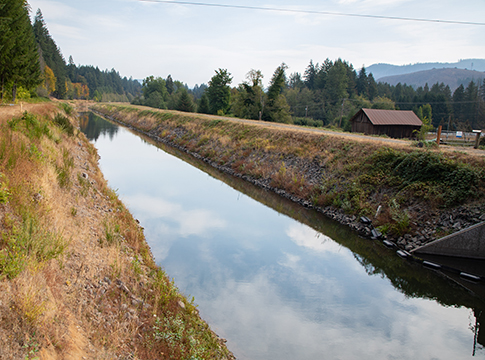
EWEB recently completed targeted wildlife management activities at the Leaburg Canal after increased beaver activity and repeated dam removals in 2025 raised concerns about the stability of the canal embankment.
Between November 2025 and January 2026, EWEB removed three beavers and one nutria from the canal area. We are continuing to monitor the canal, but at this time, we believe the situation is resolved and no additional removals are needed.
Why is EWEB removing beavers from the canal?
Burrowing animals — including beavers and nutria — present a dam safety risk at the Leaburg Canal. The canal is a nearly 100-year-old earthen structure that EWEB is in the process of decommissioning due to safety concerns. Today, the canal remains classified as a “high hazard” facility, meaning a failure could pose risks to downstream communities. EWEB is required to maintain the structural stability of the canal until decommissioning is complete. Addressing conditions that could contribute to embankment failure is a regulatory and public safety obligation.
Animal burrows can create voids and seepage pathways inside embankments, increasing potential for erosion and structural failure. Federal dam safety guidance from FEMA and the U.S. Army Corps of Engineers identifies animal burrowing as a condition that must be actively managed.
Facts about the removal
Safety Requirements
- Leaburg Canal is a federally regulated, high-hazard facility with known structural vulnerabilities.
- EWEB is legally required by FERC to maintain the stability of the canal until decommissioning is complete.
- Burrowing animals can weaken earthen embankments by creating internal voids and seepage.
- Beaver dam materials within the canal can create debris hazards and cause water to flow over the canal's banks during high flow conditions from rain or snowmelt, which can cause erosion or flooding.
Difficultes with Relocation, Removal Recommended
- The Oregon Department of Fish and Wildlife (ODF&W) advised EWEB that lethal removal was the most appropriate option, based on evidence that relocated beavers often do not survive and may spread disease.
- The wildlife removals were limited in scope and conducted by a licensed Wildlife Control Operator in compliance with state regulations.
- Beavers are abundant in the McKenzie Valley, and this removal is not expected to affect the broader beaver population in the area.
Our Care for the Environment
We care deeply about habitat and wildlife protection, and we strive to reflect the environmental values of our community. Our legacy of watershed stewardship is based on decades of preventing or reducing activities that are harmful to water quality and wildlife and promoting public awareness to maintain our healthy watershed in partnership with others.
This was a challenging situation and a difficult call. We relied on ODF&W — the state's lead authority on wildlife management — and followed their guidance.
Lethal removal is a last resort. When other options are available, we pursue them, again in partnership with wildlife management authorities. For example, at the Carmen-Smith Hydroelectric Project, EWEB and the U.S. Forest Service are working together on a pond-leveler system to manage beaver activity safely. This investment allows beavers to stay on site and continue their ecologically beneficial activities without creating infrastructure safety risks.