
Community members put preparedness into practice at EWEB's Emergency Water Station Open House at Howard Elementary School
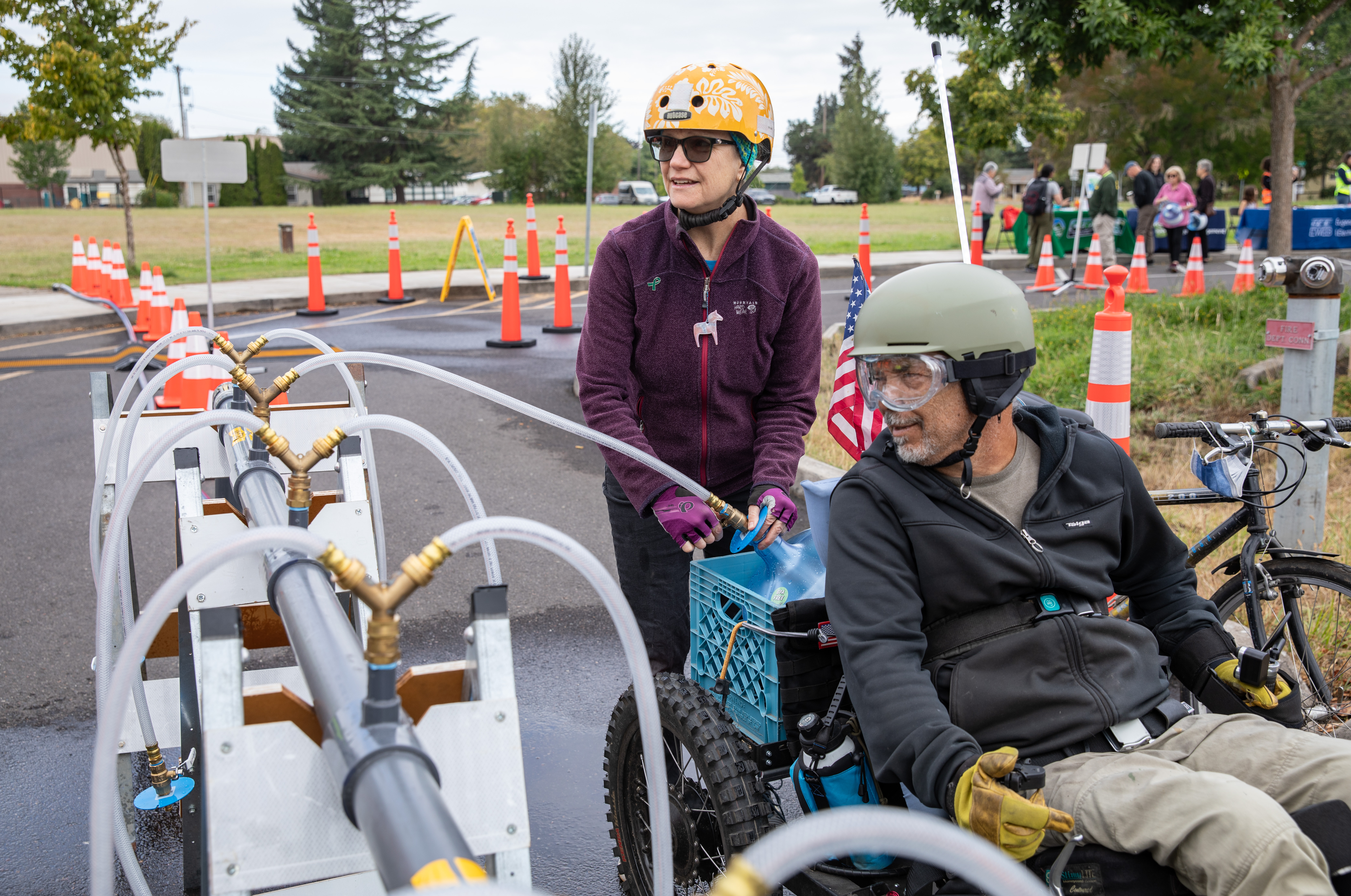
Community members practice getting to the Howard Elementary School Emergency Water Station by bike and filling an emergency water container.
--
The River Road community put preparedness into practice at the Emergency Water Station Open House at Howard Elementary School. The site will be used to distribute water if a natural disaster like an earthquake disrupts regular service.
On Saturday, Aug. 29, EWEB and Eugene School District 4J staff set up the station and invited the public to practice filling water containers and learn more about emergency preparedness.
“Our community relies almost entirely on the McKenzie River for drinking water. A major earthquake or wildfire could threaten the reliability of that single source for weeks or longer,” said EWEB Water Operations Manager Mike Masters. “These emergency water stations will give our community immediate access to clean water after a disaster.”
Emergency Water Station Open House
EWEB staff assembled piping to distribute water in the Howard Elementary School parking lot. Signage was placed to route attendees through the system. The setup was a shortened version of the full water distribution manifold, which allowed the event to take up less space, while still giving attendees a feel for where the station is located, where to park, and how to utilize the station before a real deployment.
EWEB distributed free, three-gallon water containers to attendees. Preparedness-related coloring sheets and stickers were also on hand for families.
Community members attended the Howard Elementary School Emergency Water Station Event, where they practiced filling containers and learning more about personal preparedness.


Why is this station important?
Emergency Water Stations — such as the one at Howard Elementary School — are part of EWEB’s city-wide initiative to ensure continued access to clean water during disasters that may disrupt water infrastructure for days, weeks, or even months. These stations are designed to provide two gallons of water per person per day during emergencies.
In the event of a disaster, EWEB will mobilize at Emergency Water Station sites. Residents in need of water should bring a container to fill and disinfect water before use.
How can community members become more prepared for emergencies?
Residents are encouraged to identify the location of the Emergency Water Station nearest their home and to join the Pledge to Prepare Program to prep for extended, emergency-related outages of water or electric service.
The Oregon Department of Emergency Management (OEM) advises Oregonians to become “2 Weeks Prepared.” This means having a plan and enough food, water and supplies to survive for at least two weeks following a large-scale disaster. EWEB’s Pledge to Prepare Program makes it easy and affordable for residents to gather needed supplies.
More information about Emergency Preparedness can be found here: eweb.org/EmergencyPrep.
Related Programs
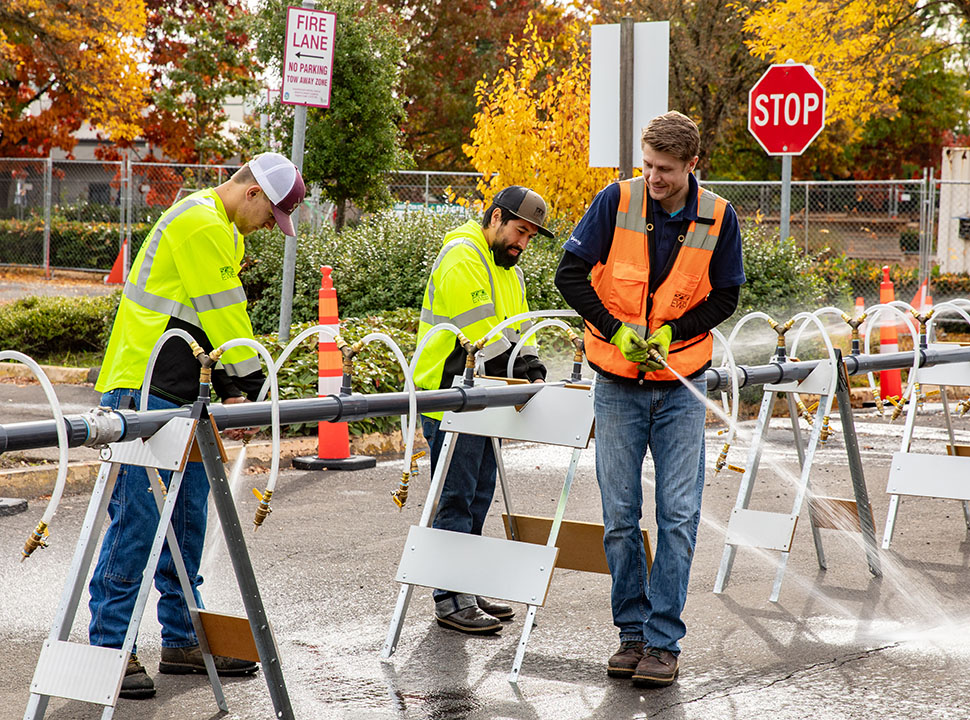
Emergency Water Stations
We are working with community partners to develop an emergency water supply program that includes several permanent distribution sites located throughout the community using groundwater wells, as well as mobile water trailers.

Your drinking water quality
Access to clean water is vital to our community. That is why we work hard to deliver water that meets or exceeds all state and federal health standards.
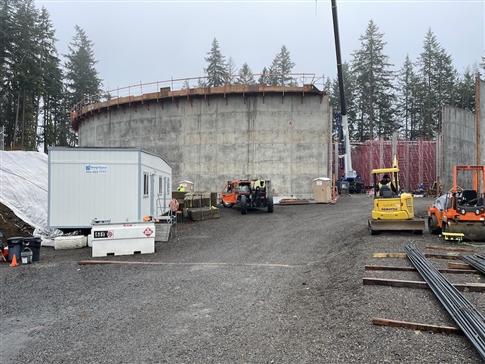
Water Reliablity Projects
We're making investments to prepare, replace and maintain our community's water system.