
EWEB Presents 2027 Electric Infrastructure Investment Plan to Board of Commissioners
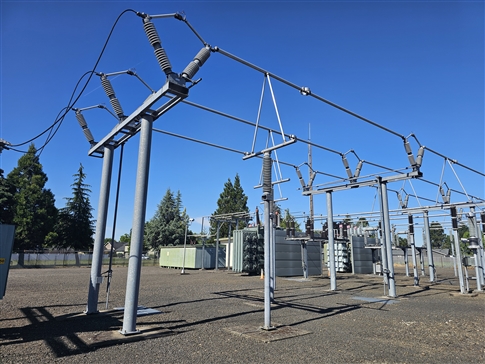
EWEB’s Board of Commissioners received the utility’s 2027 Electric Capital Improvement Plan and Long-Term Financial Plan at its July 7 public meeting, with staff presenting a proposed $626 million, 10-year investment strategy for the electric system alongside a recommended 3.5% revenue requirement increase for the upcoming year.
Why the electric system needs sustained investment
Much of Eugene’s electric infrastructure was installed in the 1960s and 1970s, and a significant portion of that equipment is reaching end of life, creating a “ballooning effect” with multiple systems aging and requiring replacement at the same time. The 10-year capital plan focuses on renewing and modernizing substations, distribution feeders, and transmission infrastructure, while also incorporating seismic and wildfire risk into new designs.
EWEB is also meeting federal compliance obligations at our generating facilities. The Carmen-Smith Hydroelectric Project, licensed by the Federal Energy Regulatory Commission (FERC), requires substantial investment for fish passage improvements, dam safety upgrades, and environmental mitigation — totaling $138 million through 2033 and representing the single largest investment in the 10-year plan.
A plan shaped by financial constraints
In recent years, EWEB has prioritized funding substation rebuilds to reduce outages, increase resilience, and modernize the system for future needs. Sustained cost pressures across labor, materials, and the Carmen-Smith project have required a near-term shift in that approach. The plan reflects deliberate tradeoffs — several large substation rebuilds have been deferred three to five years to manage rate impacts on customers, with six substation projects delayed under the current plan and approximately $65 million in near-term work pushed out. Funds are being directed toward compliance obligations and highest-risk equipment while larger planned rebuilds are rescheduled for later in the decade.
Deferring these projects is expected to have some effect on system reliability. EWEB’s average outage duration index — a standard measure of how long customers experience outages — currently averages about 55 customer-minutes per year, well below the performance of comparable utilities in the region. The deferral plan projects that figure rising to approximately 70 customer-minutes over the 10-year period as aging substations experience more frequent outages before replacement. While that represents a change in customer experience, EWEB would remain within the range of performance seen among similar utilities.
To offset these impacts, EWEB is retaining some targeted funding to address the highest-risk equipment, building up spare equipment inventory, and planning ways to reroute power when an aging substation fails.
“EWEB’s electric system has historically performed well compared to industry benchmarks as the result of generations of careful planning and investment,” said EWEB’s Electric Operations Manager Tyler Nice. “While some customers may experience more frequent outages as a result of these deferrals, the tradeoff helps keep electric bills more affordable for our entire customer base. Balancing reliability and affordability requires difficult choices, and we will continue planning carefully for both routine operations and extreme events, to limit the impact on our customers who depend on this vital service.”
The rate picture
Electric-specific inflation has risen 48% since 2016, while EWEB’s electric rates increased 32% over the same period, a gap of roughly 15%. That gap reflects, in part, five years of rate stability — between 2017 and 2021, EWEB held electric rates steady through budget trimming, debt restructuring, and careful prioritization of projects. Inflationary pressures that accelerated sharply after 2020, combined with major capital investment needs, have since created upward pressure on costs.
For 2027, EWEB has identified savings measures that bring the annual revenue requirement increase to 3.5%. That means the total amount EWEB needs to collect from customers to cover the cost of running the electric utility will increase by 3.5% next year. For residential and business customers, the actual bill impact will be determined through a cost-of-service analysis later this fall.
Beyond 2027, EWEB estimates that savings of between $600,000 and $8.2 million per year will be needed to keep the long-term rate trajectory aligned with Board guidance on affordability.
“Meeting those targets will require ongoing reprioritization and financial discipline and may involve additional tradeoffs to balance the pace of infrastructure investment against system reliability, environmental stewardship, and customer affordability,” said EWEB General Manager John Hairston. “These are the same core values EWEB works to balance every day, and finding the right balance will remain an active conversation with the Board and the public as the budget development unfolds.”
What comes next
The Board’s July direction on the electric capital plan marks the beginning of EWEB’s annual budget and rate-setting process. Key milestones over the coming months include:
- August: The Water Capital Improvement Plan and Long-Term Financial Plan will be presented at the public board meeting for direction.
- Fall: EWEB will refine the capital and financial plans and complete a cost-of-service analysis to translate revenue requirement changes into proposed rate adjustments for each customer class.
- October, November, December: Public hearings on proposed Long-Term Financial Plans and 2027 budget and rate changes.
- December: The Board will be asked to approve the 2027 budget and rate schedule.
- February 2027: Rate changes take effect.
Public process
Because EWEB is customer-owned, utility rate-setting and other business is conducted in open public meetings. To watch monthly Board meetings, provide public comment, or contact your elected Commissioner, visit eweb.org/Board.
Related Programs
Electric reliability projects
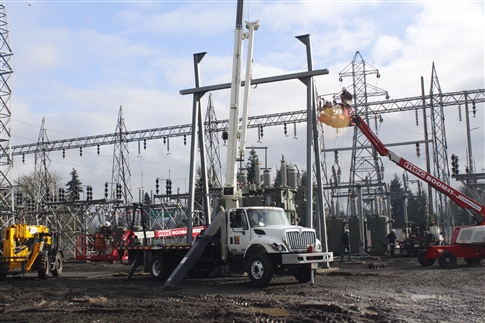
EWEB's 10-year Capital Improvement Plan for major infrastructure investments to rehabilitate, replace, and install new infrastructure will ensure we meet the current and future needs of our community, while maintaining reliable service.
Electricity & water prices
Your utility rates support ongoing operations and needed investments.
Wildfire safety and prevention
Community wildfire prevention is increasingly important as climate, drought and a host of other issues are converging—resulting in more frequent and damaging wildfire events.