
Related News
Related News
-
EWEB Must Invest in Regulatory-Required Projects - Despite Construction Inflation
Despite an escalating construction cost environment, EWEB remains dedicated to – and must – urgently complete a number of regulatorily-required dam safety and environmental projects on the Carmen-Smith Hydroelectric Project.
Find Out More -
EWEB completes downtown vaults, shaves traditional overhead costs by two thirds
Using a modular design, the new vaults save time and money while avoiding planned outages
Find Out More -
EWEB Presents 2027 Electric Infrastructure Investment Plan to Board of Commissioners
EWEB’s Board of Commissioners received the utility’s 2027 Electric Capital Improvement Plan and Long-Term Financial Plan at its July 7 public meeting, with staff presenting a proposed $626 million, 10-year investment strategy for the electric system alongside a recommended 3.5% revenue requirement increase for the upcoming year.
Find Out More -
EWEB Commissioners take significant step in planning for Willamette Water Treatment Plant
A new plant will bolster resiliency in the face of disaster and enable downtime at our current 76-year-old treatment plant.
Find Out More -
Pillars of EWEB's Wildfire Season Readiness
Wildfire season is here. We're preparing for wildfire risk, and so can you.
Find Out More -
EWEB pauses power generation at Trail Bridge Powerhouse to support seasonal fish migration
EWEB will not generate power at Trail Bridge Powerhouse from July 2 through October 31 so juvenile fish and adult bull trout can more easily move downstream
Find Out More -
Five years ago 2021 Heat Dome drove surging energy demand
Five years ago, a mass of hot air settled over the Pacific Northwest, shattering state temperature records. As summers continue to get hotter, EWEB takes action to ensure a reliable supply of energy.
Find Out More -
EWEB to use a $2.2 million grant to strengthen grid resiliency and modernize electrical equipment
EWEB was selected for two grants from the Oregon Department of Energy
Find Out More -
EWEB to pause e-bike rebate program
EWEB will pause its electric bicycle (e-bike) rebate program on June 19, following a significant increase in program participation in the first half of 2026.
Find Out More -
Hydro-powered Recreation Sites Open for Community Exploration
EWEB, the USDA Forest Service, and local construction partners celebrated the reopening of Carmen-Smith Recreation Projects on Friday, cheering on the partnerships that made possible the renovation of these treasured outdoors community spaces.
Find Out More -
Fourth graders learn about power line safety through EWEB program in schools
"Power Town" is a demonstration table that uses live voltage to show what happens when different objects come in contact with electricity.
Find Out More -
Beaver Removal at Leaburg Canal
EWEB completed targeted management wildlife activities at Leaburg Canal after increased beaver activity and repeated dam removals during 2025 raised concerns about the stability of the canal embankment.
Find Out More -
EWEB Finalizes Transfer of McKenzie Valley Electric Customers to Lane Electric
EWEB has officially completed the transfer of electric customers in the McKenzie Valley to Lane Electric Cooperative, effective May 1, 2026. This milestone marks the culmination of nearly a year of research, analysis, community engagement, and coordinated efforts between the two utilities.
Find Out More -
Sustainability Snapshot - Celebrating Energy Efficiency Projects in the Community
Sustainability Snapshots highlight impactful projects completed by EWEB's Customer Solutions department, as a way to celebrate the meaningful work happening behind the scenes.
Find Out More -
EWEB Customers Drive Record Energy and Water Savings in 2025
At a time when energy demand is growing across the region, who are saving energy are doing more than lowering individual bills - they're helping reduce overall demand, support grid reliability and limit the need for new, costly energy resources.
Find Out More - Show More
EWEB pursues affordability, partnership and flexibility with choice on future power supply
August 03, 2026 • Aaron Orlowski, EWEB Communications
The Eugene Water & Electric Board (EWEB) has made a major decision about how to meet rising electricity demand in the years ahead.
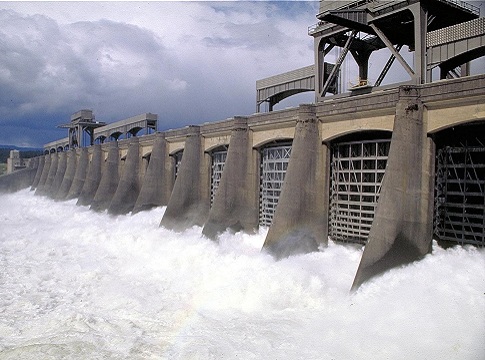
The choice came down to how much EWEB wants to continue relying on the Bonneville Power Administration (BPA) for energy, and how much EWEB wants to procure energy itself. BPA, which supplies about 80% of the energy that EWEB delivers to customers, is a federal agency that sells energy from large dams on the Columbia and Snake River systems.
Last year, EWEB signed a contract with BPA, securing $2.5 billion of affordable, clean energy for the next two decades. BPA’s hydropower forms the foundation of EWEB’s cost-effective power supply. That contract provides energy that goes towards meeting customers’ existing levels of energy demand. But it does not provide energy to meet growth in demand.
EWEB forecasts that electricity demand will rise between 2% and 10% over the next 10 years as customers switch from gasoline-powered vehicles to electric vehicles. This would add between 5 and 25 average megawatts to EWEB’s load, which is currently 270 megawatts on average.
With higher levels of electrification, including if more customers switch to electric heating and cooling, EWEB could see 70 average megawatts of load growth by 2044.
Separate processes apply to new large energy users — defined as a customer that consumes more than 10 average megawatts during a 12-month period. EWEB would need to source power to serve such a customer from a non-federal source, since BPA does not supply federal power to cover the needs of “new large single loads.”
As EWEB weighed how to meet the forecasted rise in energy demand from electrification, the utility considered several choices. EWEB could rely on BPA. Or EWEB could meet that demand by procuring energy resources itself.
EWEB chose a middle ground, opting to meet the first portion of demand growth — the first 50 megawatts — with its own energy resources, while signing an agreement with BPA to cover unexpectedly high growth beyond that threshold. The 50-average-megawatt threshold reflects a balance between EWEB’s projected load forecast and future potential local resource options, while giving sufficient scale for EWEB to build an effective portfolio.
“This decision reflects EWEB’s unique role in the community,” said EWEB Chief Electric Operations Officer Lisa Krentz. “We believe that partnerships with local power producers and local customers are important. Those partnerships make the most sense financially, allowing us to save customer dollars, while also benefitting the local economy.”
EWEB’s local governance also makes it nimbler than BPA, so EWEB can seize energy resource opportunities that BPA may struggle to capitalize on. EWEB’s existing opportunities including local prospects fit within the 50-average-megawatt threshold. But the 50-average-megawatt threshold gives EWEB, essentially, an insurance policy if electricity demand unexpectedly spikes in the years ahead, allowing EWEB to tap into BPA for “Tier 2” resources above that level if needed.
It also gives time for BPA to refine its own energy resource acquisition program.
“This decision allows us to leverage our operational flexibility and pursue near-term local resource options, while using BPA’s resources as a backstop for longer-term load growth,” said Krentz. “We can focus on our core competencies and local relationships while mitigating long-term risk.”