
EWEB State of the McKenzie Watershed Report: Overall Water Quality Remains Excellent as 2025 Marks End of Wildfire ‘Emergency Response Phase’
EWEB assures the McKenzie River is an excellent source for Eugene’s drinking water – even as the watershed continues to recover from the 2020 Holiday Farm Fire.
In fact, five years since the fire, EWEB says in its State of the Watershed Report, 2025 marks the end of the “emergency response phase” for EWEB and partners.
The report summarizes EWEB’s efforts to monitor the health of the watershed, track threats, and design strategies to preserve drinking water quality.
Ongoing impacts of the Holiday Farm Fire are a key concern, but the report also highlights the dozens of programs and restoration projects EWEB and partners have been implementing to buffer those impacts.
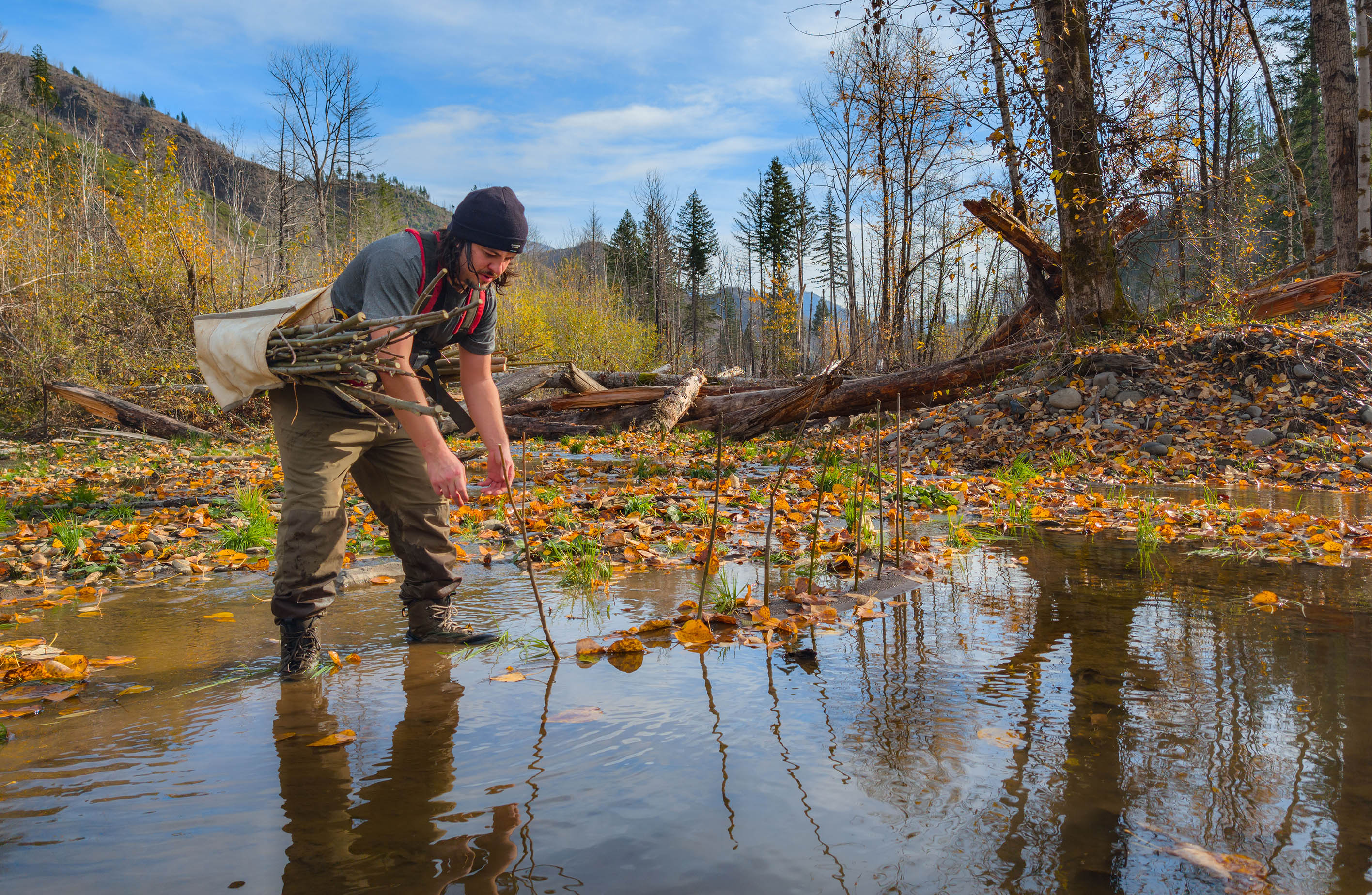
Highlights include the Pure Water Partners (PWP) efforts to replant burned areas on private and non-federal properties – including nearly one million native trees and shrubs since the winter of 2021 – and the largescale floodplain restoration projects on the middle McKenzie that improve natural watershed functions such as reducing floods and catching sediments.
“Our Pure Water Partners have done an amazing amount of work since 2021,” Water Resources Supervisor Susan Fricke told EWEB Commissioners in her presentation about the State of the McKenzie Watershed Report. “We worked with more than 230 landowners and have so many partners who have worked diligently on this recovery project, now the PWP can return to its original focus which is riparian protections.”
During 2025, EWEB also distributed over $1 million of septic system grant funds in partnership with Lane County and Business Oregon to McKenzie homeowners.
Monitoring water quality throughout the McKenzie
EWEB’s Source Water Protection Team monitors the health of the McKenzie and its tributaries throughout the watershed. The team collects water samples year-round to supplement the network of sensors that continuously collect water quality data. The team also goes out during storms to observe what kinds of contaminants heavy rains may flush into local waterways.
By maintaining such a close eye on the watershed, the team shows that the McKenzie is exceptionally clear most of the time.
It is sampling during storms, however, that reveals the cumulative effects of the Holiday Farm Fire.
Although water quality impacts have not been as severe as initially feared, high turbidity events are occurring far more frequently than before the fire burned one-fifth of the watershed.
Immediately after the fire, EWEB and partners set up erosion control devices to limit pollution from burned structures. Over many years, the burn damage across vast sections of forests can result in destabilized soils, raising the potential for rains to mobilize contaminants into the waterways below.
Overall, the storm seasons have been moderate. But during periods of heavy rain, such as prolonged atmospheric river events, the team has observed elevated sediment and debris levels in fire-impacted waterways, as compared to what similar weather conditions may have mobilized prior to the fire.
Other than the fire damage to the upper watershed, urban stormwater channels in Springfield remain a key concern for the team to monitor. The team detected low-level pesticides, elevated bacteria, and other contaminants in urban stormwater channels, but when compared to the relatively high flows found in the mainstem McKenzie, these concentrations quickly become diluted when mixed with the overall volume of the McKenzie River.
Floodplain restoration projects in the middle McKenzie
EWEB and watershed partners have made the McKenzie River an international leader in the innovative implementation of floodplain restoration projects. These projects can buffer many of the impacts from wildfires and reduce the severity of future fires.
By restoring floodplains and natural watershed processes, these projects slow down flows and allow sediments to drop out of the water column, increase wetted areas alongside waterways, and improve habitat for multiple fish, wildlife, and riparian plant species.
EWEB works with the McKenzie Watershed Council (MWC), the McKenzie River Trust (MRT), and the U.S. Forest Service (USFS) to implement these large-scale restoration projects. In 2025, partners successfully completed the large implementation of the Quartz Creek Floodplain Restoration Project.
Partners are currently breaking ground on a large floodplain restoration project on the South Fork McKenzie, to be completed in the summer of 2026.
Read the full 2025 State of the Watershed Report (Click to download PDF).