Salmon Watch continues tradition bringing students to witness miracle of spawning salmon
It's salmon spawning season, and the Salmon Watch program is also returning to our waterways.
The long-running program brings our local students to EWEB's Carmen-Smith Spawning Channel on the McKenzie River and to Whittaker Creek on the Suisulaw River to witness salmon returning to their home streams.
On the experiential-learning field trips, students examine the habitat qualities that make our rivers, creeks and riparian forests healthy homes for salmon to start as eggs, grow to fry, and return after their time at sea.
At the Macroinvertebrate Station, students identify bugs that make up the diet of young salmon and indicate habitat quality.
At the Water Quality Station, students evaluate the temperature, turbidity—a measure of water clarity—and levels of dissolved oxygen to determine if salmon can thrive in the waters.
Students learn the benefits that healthy riparian forests provide for salmon at the Riparian Station, including how trees shade streams to keep them cool, filter the water through their root systems, and drop branches into the water, providing places for fry to hide, bringing in food, and both slowing the water by creating pools or creating riffles, stirring up the water and increasing oxygen levels.
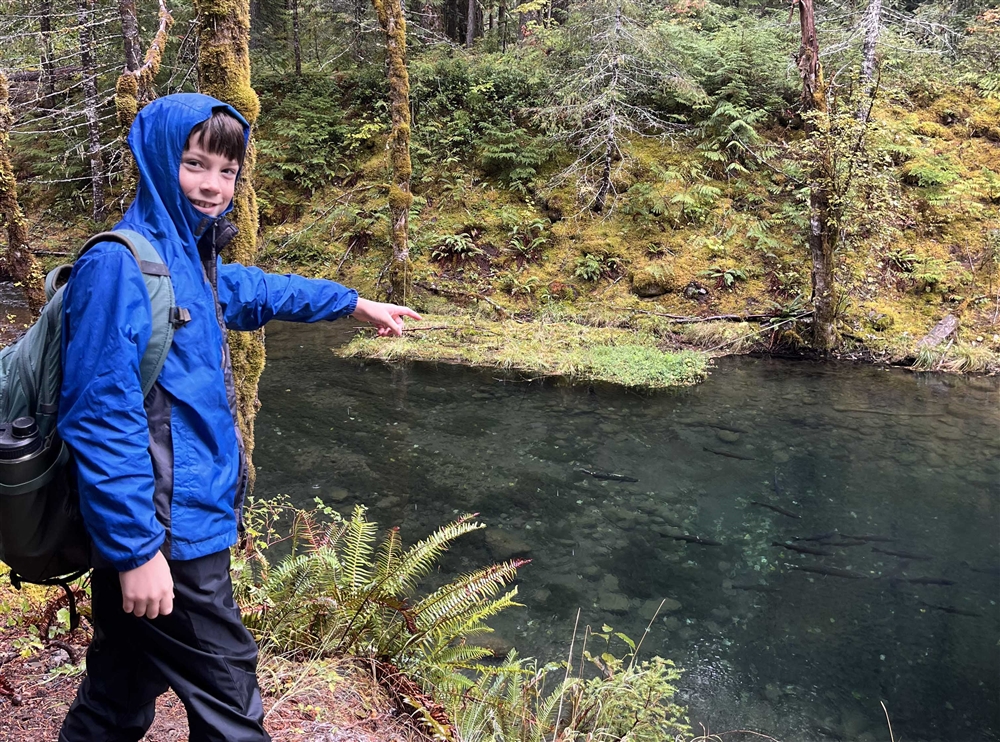
Finally, at the Fish Biology Station, students learn about salmon life cycles, threats the salmon face, and how we can protect salmon and preserve their amazing gifts to our natural heritage. These lessons occur at the water's edge where students often see spawning salmon swimming in the water for the first times in their lives.
On a recent Salmon Watch trip, Scarlett, a 6th-grader from Thurston Middle School, shared, "You don't even know how this experience has made my love of nature grow even more."
EWEB customers are a real part of making this program successful year after year, as EWEB education grants, staff time, and facilities contribute to Salmon Watch.
Other partners include the Springfield Utility Board, Oregon Department of Fish and Wildlife, McKenzie Flyfishers, Willamette Regional Educational Network, Bureau of Land Management, and the Mount Pisgah Arboretum.
The Upper Willamette Stewardship Network's Regional Education Program, housed at the Middle Fork Willamette Watershed Council, runs the show, coordinating this experience for hundreds of students every year.