
EWEB Education Programs Invest in Eugene’s Future
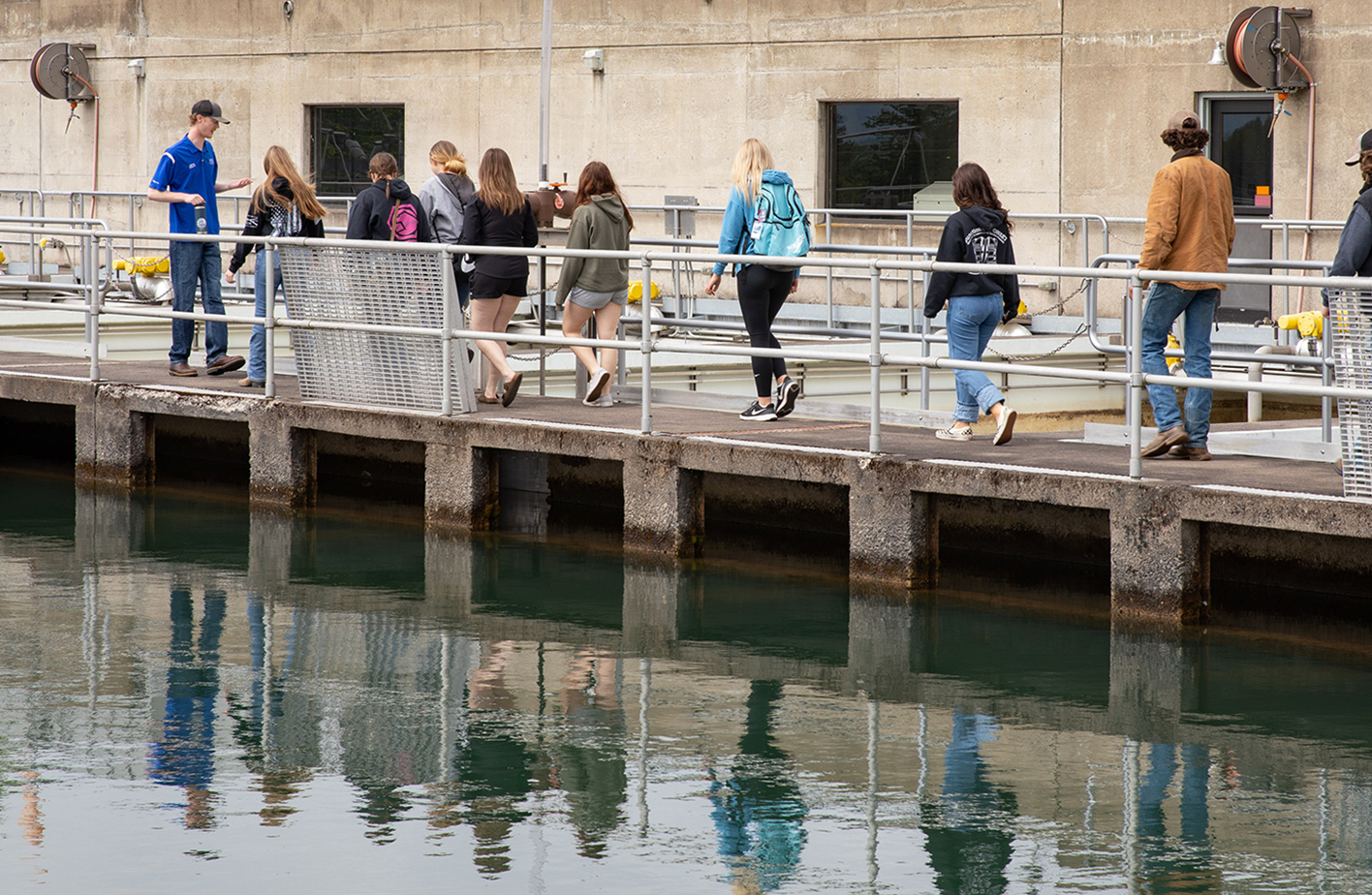
As students, parents, and teachers begin winding down another school year, we want to highlight some of the many ways EWEB customers support local schools and help inspire kids to explore the wonders of watershed health and clean energy resources.
Energy and water use is an important issue now and for future generations. Each year, EWEB dedicates a portion of customer rates to local schools. Grants totaling around $500,000 per school year support energy and environmental studies for kindergarten through high school students in EWEB service territory, which includes Eugene 4J, Bethel, McKenzie, and Springfield school districts. Students learn about the lifecycle and habitat of Chinook Salmon, how hydroelectric and wind energy work, and where their drinking water comes from. They also practice hands-on engineering and technology skills and learn how to engage in climate change solutions large and small.
Tana Shepard is the EWEB grant coordinator for Eugene 4J. She recently spoke to EWEB commissioners at a public board meeting, thanking EWEB and our customers for supporting these valuable programs.
“Without your support, we would not be able to offer as many opportunities for our 4J students,” Shepard told the board. “It’s been a pretty busy and successful year.”
She offered some statistics on how EWEB grants have supported the district, including allowing more than 3,000 students to participate in salmon education experiences and providing curriculum and other resources for more than 1,000 students to participate in the upcoming EWEB EV Challenge. Formerly known as the EWEB Solar Challenge, this event inspires middle school students to use science, technology, engineering, art, and math to design, build and race mini zero-emission cars.
Programs like these have multiple benefits. In addition to supplementing school budgets and introducing kids to energy and water issues, the programs help strengthen local workforce development.
“It takes skilled, dedicated individuals to power our community and ensure we continue to have clean drinking water,” said EWEB Human Resources Partner Lainie Knutsen. “These programs are helping prepare kids for critical and rewarding careers in science and public service.”
In recent years, EWEB-funded programs have expanded to include helping kids prepare for emergencies and education about climate change, with a lens on hope and solution through mitigation, preparedness, and resilience.
“I have a lot of different grade levels reaching out for climate education,” said Tana Shepard. In response a call for action by 4J students and the 4J school board's Climate Resolution, a 4J Climate Justice Team was formed in 2019 to support teachers and students working together to improve climate education.
Another new program implemented this year is focused on waste collection at 4J schools.
“This was a really cool year because we rolled out the Love Food Not Waste program,” Tana Shepard told EWEB commissioners. “I’m especially focusing on water and land use and what that means for food waste and we have implemented a K-12 food waste collection in all of our schools across the district.”
Learn more about your rates support education programs in our community and find a curated collection of learn-at-home resources.